After Christmas

                                 After Christmas

Lots of my friends tell me that January is the month of the year they least like. It always seems to them to be cold and dark with little to look forward to other than going back to work, especially after having had a Christmas and New Year holiday, full of fun and laughter and family time. Me. I think the opposite. I quite like January and think it is unfairly thought of. To me it is the time when days begin to stay lighter for longer, so not being as dark as November or December. It also seems as though the year is now turning back towards the summer, the winter always seems as though we are going away from Summer, January turns the corner and brings us back. It is also the time of new hope and, in lots of instances, especially with resolutions, a time to start afresh. We have recharged our batteries over the festive period and are ready, once again to face the world.

          However, It is possible that this could be the saddest time of the year. Post Christmas Blues. All the excitement of Christmas, the expectations and hope. All the food and parties, drink, happiness and laughter. For many there will have been the falling out, arguments, disappointments and heightened feeling of loneliness. The Christmas lights and decorations have gone, taken down and put away for another eleven months. Houses seeming bigger, more space in them, but not as bright. There is a scientific explanation for this, to do with adrenaline and dopamine crashes.

          In addition, there is the disruption to the normal daily and weekly routines. Different eating and drinking patterns, a different rhythm to the days and weeks. Sleeping patterns are disrupted, for many there will have been a massive reduction in sleep, mostly due to the changes mentioned previously, but also with children – excited, wanting to play with their newly acquired toys and games, and more than usual arguments and tears.

          Add to this the start of, for some a two-week break, and others at least more time off work than usual, and the relaxing winding down and switching off, then as the holiday comes to an end and work beckons, usually in January, those back to work blues and anxieties take hold.

          In amongst all of this, don’t forget those people who usually spend time with themselves, many through circumstances, some through choice. They may have had more contact with other people over the festive break, they may even have enjoyed that company. But now they find themselves alone again. The Christmas fever bringing them more than the usual number of visitors, now find themselves with none. Those who are too old or infirm to visit family, have had the family visit them, now unsure of when they will see them again. Not knowing when they will see or interact with another person. How would they have felt the nearer the end of the holidays came?

          In our day to day lives it is really important that we find time to visit people we know are on their own, have family living far away, people we don’t normally see, ones we know don’t get many visitors. It can be tricky when we get caught up in our daily lives: work, children, hobbies, other people. If it is possible, a change in mindset where we can say I must make that visit part of my daily or weekly routine and do it. Get out of the car and knock on the door before going into your own house. Stop off when coming back from the shop. Leave a little earlier to check. Invite people round. This is easy to say, not so easy to do.

Hopefully for everyone this year will bring good health, companionship, friendship and a whole load of happy times.

Our night part 1.

Our Night

Here I am, staring out of the kitchen window again. Staring out over the garden. Looking, but not really seeing. The trees are moving. There are clouds and birds in the sky, I think. But it all means nothing to me. Not these days.

My rock, my life, my whole reason for living – my wife, my Rosie – is leaving me. How? Why? When? The sooner, the better for her. Don’t get me wrong; I don’t want her to leave. If – when – she goes, it will also be the end of me.

Forty years we’ve been married, through thick and thin, disaster, tragedy, elation, love, and friendship – and, yes, at times we probably hated each other. It didn’t matter what happened between us, what we did, said or saw. We were always there, together, a couple. Now there’s an intruder. It’s taking her away from me.

Taking her life away.

This despicable, devastating disease has crept into our lives to destroy her, piece by piece, slowly, and painfully. The brightness and laughter in her eyes are fading. It was the first thing that brought me to her. It will be the last thing that goes. Her smile would light up any room, any place. That brightness and sparkling in her eyes always gave out love, warmth, and laughter, entrancing everybody who met her. 

Her body has changed in the few months since she fell ill. The gentle curves of motherhood that stayed after the children were born have now gone, replaced by saggy, stretched skin, barely clinging to her bones. The long flowing brown hair she would swing from side to side is now thin, wispy and grey. Sometimes lumps come out when it is brushed – something that must be done for her, as she no longer has the strength to do it herself.

Just as painful and upsetting is seeing her unable to move by herself. She lays in bed all day now, needing help to sit up and feed. Once she was so full of energy, making fun of me if I had to sit down for anything. Always on the move, doing something, going somewhere, meeting friends or working; she had enough energy for the two of us.

I miss the long conversations we had throughout our life together, mostly about nothing important; just sitting and talking, re-living past events, catching up on what the children were doing, places we’d been and seen, what was happening with the neighbours. Unbothered by the occasional silence. Never realising what time it was. Not knowing we’d been sat for hours. Eventually making our way to bed, sometimes in the early morning. Now, I seem to do all the talking, getting only an occasional response or contribution. Only when she feels strong enough will she force the words out of her thin and cracked lips. Hers is a quiet, croaky, lifeless voice, not the melodic, bright voice filled with enthusiasm, love and warmth that I fell in love with and have been used to all these years. When she does try to speak, it’s to ask about the children, or to get me to talk about what happened in the past.

The children. Jack, our son, he’s just turned thirty. The eldest and tallest, almost six feet. He has an athlete’s physique. Comes from doing a lot of sport, particularly football, and some cricket. When he was younger, most people would say he looked like his mother. However, as he got older, he started to take on more of my looks, especially facially; poor lad. He’s his mother’s son in that he followed her into teaching. Really good he is, as well. He has the caring spirit, patience and energy of his mother, which all teachers need these days. He lives with his partner, Sarah. They’re planning on getting married next year. The thought of not having his mother around for that must be having an effect on him, but he doesn’t show it. Not in front of me, anyway.

Sam, our daughter, is in her mid-twenties and has just qualified to be a vet. She has a job in a practice on the other side of town. She shares a house with some friends she met at university. They all met in their first year and have been together ever since. It is fair to say that if Jack is a mother’s boy, Sam is a father’s girl; the old clichés, even though her looks and personality are almost exactly the same as her mother’s. Small in size, big in personality, with shiny, long brown hair, just like her mother, and eyes that shine and sparkle with love and laughter. In her, it is possible to see everything her mother was: pretty, energetic, enthusiastic, full of life and energy. At the moment, she doesn’t have a boyfriend, but there is some lucky man out there who will find her one day.

 Jack’s round nearly every day. He stops off on his way from the school during the week to check whether I need anything bringing or doing. Sam gets here whenever she can, which is nearly every day, depending on whether she is in the practice or on call.

I’m not sure how they’re getting through these dark days. They’ve seen the person who has loved them, encouraged them and been there in everything they’ve done deteriorate quickly. Become someone who needs their help and encouragement instead of the other way round. Without them, I think I would have given up weeks ago. They’re the ones who have kept me going. How blessed I’ve been that they have both played their part, done everything possible to be there for their mother and to support me – never begrudgingly, always lovingly – even though they have their own lives to be getting on with.

I don’t get out much at all now. When the weather’s fine, I sit in the garden. Jack and Sam bring any shopping I need. If they’re both here, one of them will take me out, either for a walk round the nearby park or to the shops, while the other sits in with Rosie. I can’t go out and leave her on her own; I’m not bothered about going anywhere anyway. I know it’s all having an effect on me, but I don’t feel any different. Maybe I get tired quicker, and more emotional. I try not to show that part to Jack and Sam, but I’m not good at hiding it, and they’re too clever not to notice anything. In fact, just the other day, I heard them talking. It seems as though I’m beginning to look a lot older and slowing down. Forgetting things as well. They tell me things and I don’t remember, or I ask them about something that they’ve already told me. Sam said that the other day I asked her several times to get me some milk from the shop. “If I got the milk he asked me to get, he’d need his own cow,” she said to Jack, which got him started.

 “That’s probably because he puts it in daft places. I’ve found it in the freezer and in the washing machine. Good job it was me setting the machine to go; God knows what would have happened,” he told Sam.

They’re great kids, doing an amazing job looking after the two of us. I’m not sure how they’re feeling or what they’re thinking. They never give anything away when they’re here. Well, nothing I’ve heard or seen. There are times when they are here together and I’m sure they must make some comment. I’m also sure they keep in touch with each other through their phones. It makes me feel guilty that I’m becoming a worry for them as well. They have their own lives to live and shouldn’t be using their time bothering about me.

I can’t keep staring out of this window. I’ll make Rosie’s drink and a tea for me and go upstairs to her. I turn away from the window and switch the kettle on. While I’m waiting for it to boil, I make Rosie a dilutey drink with plenty of water. After making my tea, I walk slowly upstairs and open the door quietly, not wanting to wake her if she is still sleeping.

“Hello, love. Just me. Got our drinks,” I say as I sit on the chair next to the bed. I’ve been spending more time in this chair than anywhere else. It looks as though the cushions have taken the shape of my backside. Rosie looks up and smiles weakly at me. I put the drinks down. “Not much happening out there today. Bit of wind, some sun, and a few clouds, but quite warm. Do you want me to read the news?” I ask.

“Not yet. I think I would like our story first today. I’m a bit tired this morning, and can’t be bothered with any bad news,” she says, her voice sounding weak and tired, which isn’t a surprise, as she’s had a restless night. “And when we do get to the news, can you try and find something good? It all seems to be so depressing,” she adds with a smile.

“Course I will,” I say. “Right. If you’re sitting comfortably, I will begin. Once upon a time …”

“Pack it in, Matthew. Just get on with it, you daft bugger.” This time a smile does spread across her face.

Every day for the last few days, she has wanted me to tell her the story of the night we met. How can I refuse that request? The truth is, I never get fed up with telling the story. It’s as if she knows she’s leaving and wants to re-live that strange, happy event, even though it happened all those years ago, way back in the nineteen eighties. I’d never realised it meant so much to her. She only wants to hear my part of the story, who I was with, where we went and what we did. I’ve never understood why that would interest her. She just tells me it completes the picture; she knows what she did that night when we weren’t in the same place. It’s something we talked about when we first started seeing each other properly. She often interrupts when I’m telling the story, wanting to know different things about what happened, or to make sure I don’t miss anything out, as well as adding in some of her own parts. She even remembers what she was thinking and feeling!

It was an extraordinary night, to say the least. I hadn’t been going out much; been let down and messed about by the girl who was my fiancée.

My friends had encouraged me to have a night in town with them. I went, but wasn’t really in the mood. I was afraid I might see my ex-fiancé – which I did – but I also met my wife to be, which I wasn’t intending or expecting. It wasn’t the only strange thing that happened that night, but it was certainly the one that shaped the night and my future. It was also one of those nights where everything unusual and weird that might happen happened. 
Twixmas.

       What is this strange sounding and looking word? Twixmas is the time between Christmas and the New Year, also known as the Festive gap.

        New year celebrations are not new; there has been some kind of new year celebration for around 4000 years. These celebrations were related to astronomical events. The Romans introduced and established the 1st of January as the new year date when they developed the Julian calendar. This was widely accepted until 1582 when Pope Gregory introduced the Gregorian calendar. It still had 1st January as the new year start date and was mainly used by the Catholic church. In 1752 Protestant nations adopted the Gregorian calendar and from this point there was widespread celebrations of 1st January, New Years Day.

        However, 1st January is not a universal New Years Day, many cultures and nations celebrate New Year on a different day and date. This is due to the use of different calendar systems and cultural celebrations. Arguably the most well-known is the Chinese New Year which occurs between the end of January and into February. Other examples include the Lunar New Year in East Asia, Islamic New Year, Ethiopian New Year and the Jewish New Year.

        The time between Christmas and New Year, Twixmas/Festive gap, is always a very strange and somewhat subdued time. It’s as though no-one really knows how to fill in the days. It’s a short time between the two celebrations so not really worth starting any new or big projects (that’s always my excuse!). A lot of workplaces shut down, not feeling that it’s worth opening for a few days, equally as it could be more expensive to open the office or factory for such a short time.

        Having overeaten and drunk for the days of Christmas, people use this calm in order to give their body time to recover before they attack it again with more food and drink. Some will go away for the New Year celebrations, so their Festive gap is in preparation for a trip.

        It can feel a sad time. The excitement, expectations and enjoyment of Christmas all finished. Even the lights that shone brightly before, seem to shine a little dimmer. That’s if they’re still switched on, many not seeing the point anymore. Music on TV and radio is also different, Christmas songs wrapped up and put away along with the Christmas TV specials.

        It is almost as if the houses, streets, villages, towns and cities are saying this is enough, we need to rest before the next round of celebrating.

        So, whatever you do, however you spend the time in recovery, enjoy your Twixmas or Festive Gap, and look forward to New Year celebrations, whatever they may look like.

Happy New Year.

Christmas.

          As we know Christmas day is 25th December. But it is generally known that this wasn’t exactly the real day on which Jesus was born. Choosing the 25th of December allowed early Christians to put this celebration with existing pagan ones during the cold dark winter months.

          The early years of Christianity and Christmas concentrated on the birth of God’s son, God on Earth, and what it stood for. The prophecies coming true, a new era, a new way of life. Something for everyone and a way to live, with the promise of everlasting life. This progressed into celebrations, singing and dancing. Some of which led Cromwell to cancel Christmas when he took over the country. Thankfully, this didn’t last long and after a few years Christmas was re-instated.

It re-invented itself during the Victorian era, in particular through the writings of Charles Dickens and the influence of Prince Albert.

          In the modern era the emphasis appears to be moving away from the birth of Jesus and Christianity to the more materialistic and commercial elements we find today. Father Christmas could be seen to be taking over from Jesus. It could be argued that there is a struggle between the two making this an important time for Christianity.

          Even the songs of Christmas have changed. A version of Carols was first sung around the 4th century and developed over the coming years, becoming more popular during the Victorian period. These were nearly all about the birth of Jesus. Nowadays these songs are still sung in churches and by carol singers, however the more popular tunes and songs of the present time seem to refer more to present giving and receiving, relationships between lovers and spending family time together.

          Where will Christmas be a hundred years? Not that I will be around to see. The struggle continuing, Father Christmas and his presents winning, Jesus making a comeback or Christmas disappearing.

Christmas carols.

Christmas carols emerged and developed from the 4th century onwards. Particularly in the 14th century and into Victorian times.

Christmas carols, or, more accurately, winter songs, have been around since the 4th century. Early Pagan festivals and rituals had songs and dances to help people get through the winter months.

The first carols as we might recognise them came from Franciscan friars around the 14th century. The 13th – 15th centuries produced many songs which were sung during social gatherings as opposed to in the churches. The Victorian era saw the greatest amount and range of carols being produced. Many of these we still sing today.

Into the 20th century and the expansion and divergence of music saw more modern songs and carols being written and recorded. With the advent of pop music and music charts there came fierce competition to get the ‘Christmas No1’, the biggest hit song of the year. As music trends and ideas progress it will be interesting to see how this affects Christmas songs of the future.

Try and find the Christmas carols in the following version of the Nativity. There are 23, which includes an odd one out.

The first Nowell happened on a silent night, a holy night, in the bleak midwinter. It came upon the midnight clear in the little town of Bethlehem, Royal David’s city.

Angels from the realms of glory appeared to shepherds while they watched their flocks at night, out in the fields. They went to the stable which the Herald Angels sang to them about,

Meanwhile, three kings of the orient were travelling from the east. They arrived at the stable where Mary had her baby,

          “Unto us is born a son,” they exclaimed as they saw the baby in a manger, born there because there was no crib for a bed, “Joy to the World,” they all sang, even the little donkey which had carried Mary. They were in a stable because there was no room at the inn.

          Ding Dong merrily on high the bells rang signalling the twelve days of Christmas.

So …

Merry Christmas everybody, come all you faithful, come and celebrate. Deck the halls with boughs of holly and a Christmas tree.

We wish you a Merry Christmas.

Advent calendars

Advent calendars are given on 1st December, the start of advent. Some last for 24 days, until Christmas Eve, most have an extra gift for the 25th December, Christmas Day. These started in 19th-century German Lutheran homes as a method of counting down the days up to Christmas. It gradually developed into the printed, windowed calendars of today. They all started with pictures and then developed into treats for each day. Developing in Germany, these calendars started to spread throughout Europe from the 1930’s and in USA during the 1950’s after one was presented to President Eisenhower. Most of these early calendars had pictures behind the doors. It wasn’t until the 1960’s when Cadburys first launched a chocolate Advent calendar in the UK, and then from 1990’s when novelty calendars became popular. Now calendars can contain just about anything and are very popular with children and adults alike. Chocolate calendar are still available

It is an example of amazing marketing. Advent calendars are no longer only appealing to children, but everyone, children of all ages. There are still the basic small chocolate treats, cheaper than all of the others. I have seen advent calendars with soap, shampoo, shower gel, energy drinks and alcoholic drinks. They are suitable for males and females. Most have Christmas colours, decorations and scenes.

Do these modern calendars take us further away from the true meaning of Christmas or bring us nearer? On the one hand they take us away because it is the material side of Christmas, people making money, others demanding more. On the other hand it could be argued they bring us nearer, as people will be thinking about Christmas and its meaning earlier, the opening of a day door hopefully giving that reminder. Some might say that anything that brings Jesus to the people is a good thing.

It is probably a mixture of both, there is the material money side of things, especially making them into a mass appeal and extending the buying and selling season, but, in turn they do make everyone more aware of the true Christmas. They also bring enjoyment which is what the season should be about, the birth of a baby who changed the world, should make everyone feel happier and more positive.

Paying sports stars

Are sports stars paid fairly? Do they earn the money they are paid? Are they worth the money they get? What do they provide?

Many will argue that sports stars provide entertainment. In a lot of instances they do, but is this subjective, dependant on the sport and the level at which it is played. Premier league footballers are supposedly amongst the best, most talented in the world, but I have seen football at different levels and get more entertainment from watching lower leagues. It is faster, more intense, real with less faked injuries, with players who, at times, show a similar level of skill.

Is pay related to the sport? There is a lot of money, and spectators, in football, less so in handball, so these players get paid less. even though they will train hard and play hard. They also need a lot of skill and ability. It could be argued that the commitment and effort in some of the lesser known sports is far higher than in the more televised, watched and supported sports.

Some sports are awarded pay related to performance. Tennis, Golf, Snooker and Darts, among others, reward the better players by paying more the further through the tournament they go. This may seem fairer but, at the end the winner can still receive a substantial financial reward.

This all becomes more difficult to agree with, or understand, when compared to how people who look after and care for us are paid. Some sports players are paid more in one month than Nurses or Teachers are paid in one year. How can this be right and fair? The signing on fee that some of them get could be enough to pay for life saving hospital equipment, or even a new hospital or school.

People

People. We are them, we live with them, we work with them, we make friends and lovers with them, they are unavoidable. They are also totally annoying, especially when they are outside, in shopping centres, bars, cafes or even just the park or seaside.

Walking along the pavement, in the shopping centre or in the park, people seem as though they are always in a rush to be somewhere else. Often other people get too close, there have been times when someone has almost taken one of my shoes off with their feet, they are that close behind, even when the place is not busy, with space all around. If I have to stop suddenly to avoid other people then they will walk into the back of me.

Stopping suddenly is also a big issue. Trying to keep clear and give other people space doesn’t always work. They stop suddenly for no apparent reason. Occasionally there is a legitimate reason for stopping, but not always. This could be because their phone has started to ring and nothing else matters, especially any other people nearby. If someone sees another person they know, they will stop suddenly to say hello. As well as this people will stop quickly in order to check their bags or to get something out. In addition they might see something in a shop window, stopping quickly and then changing direction, regardless of who is around them.

This changing direction is amazing to watch. One person causing a whole load of chaos as the people around them take cover. These in turn getting in the way of the people around them. The person who caused it continuing to walk on, totally oblivious to the chaos they have caused.

There are those people who always seem to be in a rush and feel the need to push past others, or even knock them out of the way. They don’t take into account the other person; their age, needs or mobility. The only thing that matters is that they can pass and get on with what they want to do and where they want to be.

People problems are not only with movement, some seem to think that they need to be heard more than anyone else. How often have you been in a bar, restaurant, cafe, or even just walking down the street, and all that can be heard is the voice of one person? The people with them can’t get a word in. Even if they do, it seems as though they are not being listened to and even talked over. Conversations don’t happen.

As well as not letting other people talk, they think that their opinion is the only one. If someone gets the chance to speak, and their opinion is different, or they offer an alternative idea, they don’t want to know. Not always disagreeing, but pushing their ideas more, and the reasons why they are right.

The next time you are out and about, beware! People are out there!

Cycling dangers

Cars.

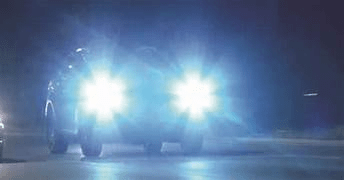
These are an obvious danger, but, strangely, not the worst. Cars pull out in front of, as well as the side of cyclists. Often not seeing the cyclist, even though they might be wearing bright clothing and have enough lights to blind every driver on the road and create a light halo as though some spaceship is shining on them trying to pull them into it. The lights on most vehicles

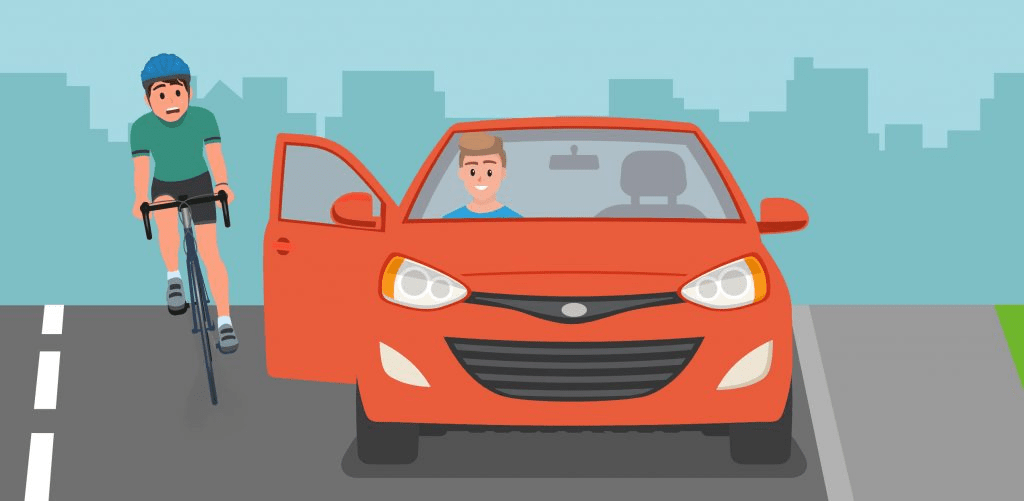
these days are very bright and almost make it impossible for other drivers to see properly, so imagine what effect this could have on a cyclist, blinded by the lights (sounds like a title for a song). If this doesn’t work then a motorist will attempt to attack other drivers. Motorists will pass cyclists at the most inappropriate and dangerous time. They think they have enough time to pass, but rarely have, causing distress to drivers on the other side of the road. But, by far the most common, and possibly most dangerous and easily avoidable is .. opening a car door when a cyclist is passing!

This happens on far too many occasions.

Roads.

In this country the roads are awful, especially the country lanes. Potholes everywhere.

Even if a cyclist sees one they may not be able to swerve round it because a car will be too close, not giving enough space, and flashing lights and blaring horns if a cyclist dares to move out to avoid the hole. Grit on roads is an obvious hazard, making them slippery and difficult to negotiate, add to this wet weather from rain or melted snow and ice and they become even more treacherous. As with trains, leaves are also a danger, but not the only natural hazard. In Autumn farmers cut their hedges.

The small cuttings are a problem as they cause punctures.

People. ..

Or pedestrians. There are many pedestrians who think the road and pavement is theirs and they can walk or step wherever they want, whenever they want. This is a danger not only to themselves but to cyclists. Cyclists have to be aware of what is likely to happen when there is a person nearby. They can step out into the road unexpectedly, not having seen the cyclist, looking only for cars, lorries or motorcyclists. When they approach a Zebra crossing, again, they don’t look properly and step out. Some think that a Zebra crossing is there for them and they don’t have to check the road, assuming that whatever is on the road will stop immediately. Some pedestrians

throw litter into the road, this can be anything from a sweet wrapper to cigarette ends. Getting one of these in your face is no laughing matter.

Other cyclists.

These can be your worst enemy! Talking, not looking where they’re going.

Swerving suddenly to avoid obstructions. Getting too close in a group. Riding too fast. Racing each other. The list is endless, but I’d better not say any more. Cyclists are already thought of as road rebels, and this is supposed to highlight the dangers from other factors. really, cyclists need to have the most road awareness of all road users.

Be safe out there.

Happy cycling!

Sons.

I thought I was struggling with my two sons. Both of them in their late teens, entering early adulthood. Seem to know everything and not want to do anything. Unless it’s for them. And, of course, now they are that age they are old enough to do things for themselves and don’t need parental permission. But often need parental money. Then, talking to a work colleague who has two boys of a similar age I realised it was a universal problem, everything I described, she was also going through or had done. As we were talking a customer overheard and joined in the conversation, experiencing exactly the same things we had been discussing.

Before I start I would like to say that I think my two sons are amazing people and growing into even more amazing young men. They are both talented in different ways, full of energy and able to think for themselves. They are also liked and respected by everyone they meet or are involved with in the many activities they take part in.

That said….

….when they come into the house, it is rare they actually stay downstairs and talk to myself or their mother. Instead going straight to their rooms and hibernating. Only appearing when they want food. In fact one of them orders his food by text! When food is ready they will wait as long as possible before coming to get it, hoping one of us will take it up to them. Bringing used plates down never happens.

They do get washed, showered. After almost every movement they take a shower. Go to the shop and back, take a shower. Play sport, take a shower. Return from visiting a friend, take a shower. Each time using a different towel and leaving it to dry itself on the bathroom floor. Unless the cleaning fairies come along and tidy up. One of them leaving underpants in exactly the same place every morning, having to step over them to get out of the bathroom. This has improved slightly with the introduction of a washing basket on the landing.

They never seem to stop eating. Their diets are very different. One of them doesn’t mind what he has as long as it is with chips, doesn’t include vegetables and is not too spicy. The other eats anything. However he has now started to complain about the way it is cooked, this has never been a problem previously. More interestingly he wants to cook himself. Which sounds great, but refuses to wash up, and there is never the right food in the house.

I was once a young adult, with a younger brother. I’m pretty sure I was never this bad. Then when they do something it brings back a memory of what I did or said, or didn’t do. Unfortunately my parents are no longer here, but I feel sure that if they were and I asked them or told them about things, they would put me straight.